Who We Are
We offer TIC services to enhance fire, life, and electrical safety globally, confirming compliance and reducing risks.
Dyne Fire Protection Labs, an NFPA Global Solutions company, provides independent laboratory testing for firefighting foam concentrates. Testing is conducted to help confirm that foam concentrates remain in compliance with applicable standards and manufacturer specifications.
Firefighting foam concentrates can be affected by aging, contamination, exposure to environmental conditions, improper storage, dilution, and other factors that may impact performance over time. These conditions can alter critical foam properties, including expansion, drain time, and fire suppression, and fire suppression effectiveness. Laboratory testing provides valuable information to evaluate foam quality, identify potential deficiencies, and support compliance with applicable NFPA inspection, testing, and maintenance requirements. Testing helps system owners and facility managers verify that foam concentrates remain suitable for service and capable of performing as intended during a fire event.
Firefighting foam concentrates are critical for suppressing flammable liquid and other special hazard fires, but aging, contamination, improper storage, temperature fluctuations, and accidental dilution can affect their quality and performance over time. Laboratory testing provides objective data on foam condition and performance, helping determine whether the foam remains suitable for service and supporting maintenance, replacement, and compliance decisions.
Test results outside expected performance parameters may indicate an increased risk of reduced fire suppression effectiveness. Periodic testing helps identify potential issues before an emergency occurs, allowing corrective action to be taken and helping confirm foam fire protection systems perform as intended when needed.
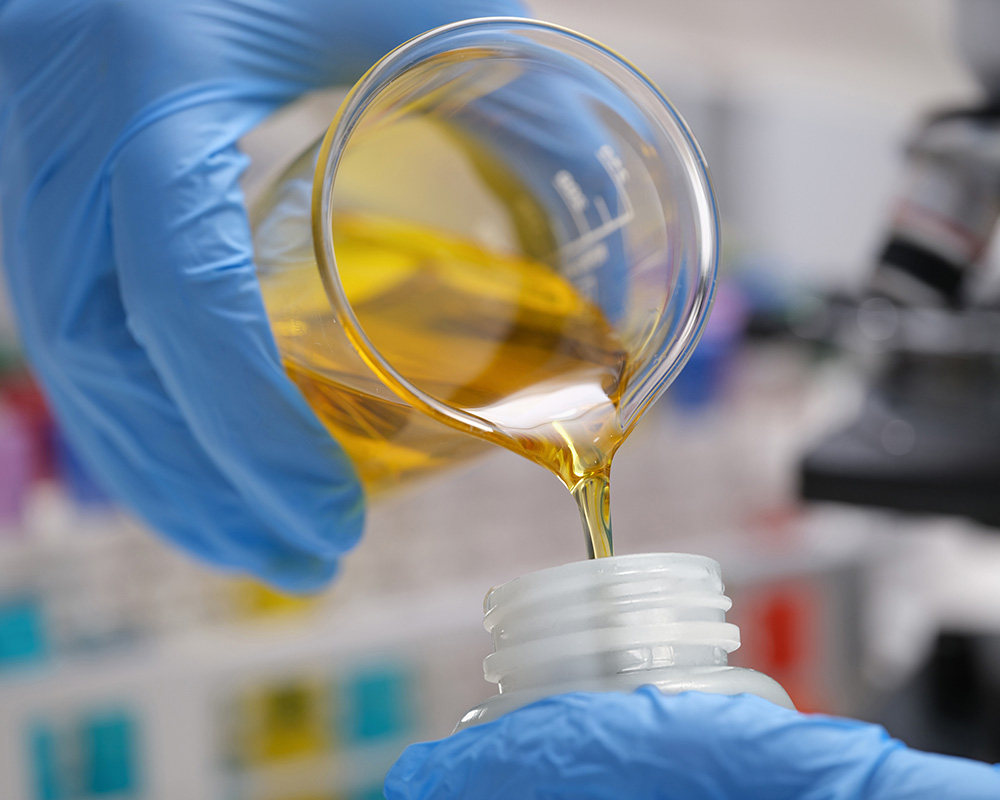
NFPA standards require that firefighting foam concentrates be inspected, tested, and maintained to verify they remain capable of performing as intended throughout their lifetime. Temperature fluctuations, contamination, improper storage, dilution, aging, and repeated handling can affect foam properties and potentially impact fire suppression performance during an emergency.
Periodic laboratory testing helps verify that firefighting foam concentrates continue to meet manufacturer specifications and applicable standards for critical performance characteristics. Testing provides objective data to support maintenance decisions, demonstrate regulatory compliance, and build confidence that the foam will perform as intended.
Key Capabilities Include:
Standard Turnaround: 5-business days
Expedited Testing Available: Contact us for pricing.
Quantity Needed
1 Kit = 1-4 samples
2 Kits = Up to 8 samples
3 Kits = Up to 12 samples
Applicable Testing
Kit Includes
Quantity Needed
1 Kit = One job (1-2 samples)
2 Kits = Two jobs (1-2 sample each)
3 Kits = Three jobs (1-2 samples each)
Applicable Testing
Kit Includes
Quantity Needed
1 kit = 2 samples
2 kits = 4 samples
3 kits = 6 samples
Applicable Testing
Kit Includes
Shipping Information
Ground shipping to you is included, as well as return labels (UPS/USPS) within the contiguous United States (limited free 1-way shipping to Alaska, Hawaii, Puerto Rico, and Canada; inquire for details). Expedited shipping is available at your cost.
Firefighting foam testing helps reduce risk by identifying changes in foam concentrate quality and performance that may occur as a result of aging, contamination, improper storage, dilution, or environmental exposure. Left unchecked, these conditions can degrade critical foam properties and reduce the effectiveness of a foam fire protection system during a fire event, potentially increasing the risk to people, property, and operations.
Laboratory analysis provides objective data on key performance characteristics such as expansion ratio, drain time, and film formation (if applicable). This information allows system owners, contractors, facility managers, and authorities having jurisdiction to make informed maintenance, replacement, and remediation decisions before performance issues impact system reliability. Testing also supports compliance with applicable NFPA inspection, testing, and maintenance requirements, as well as manufacturer recommendations for ongoing foam concentrate evaluation.
By proactively identifying performance concerns and documenting foam condition, firefighting foam testing helps maintain system readiness, support regulatory compliance, extend the service life of foam inventories, and provide confidence that foam fire protection systems will perform as intended when called upon to protect life and property.
We test all types of foam including AFFF samples.
Firefighting foam is required to be tested annually.
We require at least 8 ounces or 250 ml for NFPA testing. For IMO/USCG testing, we offer 500 ml kits (see IMO/USCG below).
If the sample being taken is a foam concentrate sample, keep in mind that these tanks contain a large volume of foam that may not be uniform throughout. The tank should be sampled from two different areas, the top and the bottom for example, to help confirm that the foam is acceptable throughout.
There are various reasons why foam may fail. See the articles for details or call 800-632-2304 to speak to one of our analysts.
Verifying that a firefighting foam system accurately proportions foam and water is critical to the system’s effectiveness in the event of a fire. A proportioning sample requires a sample of concentrate as well as the proportioned sample. You may send us a sample of your system water to use for testing.
The National Fire Protection Association Standard 25, Inspection, Testing and Maintenance of Water-Based Fire Protection Systems recommends foam bladder tanks systems be inspected at least annually.
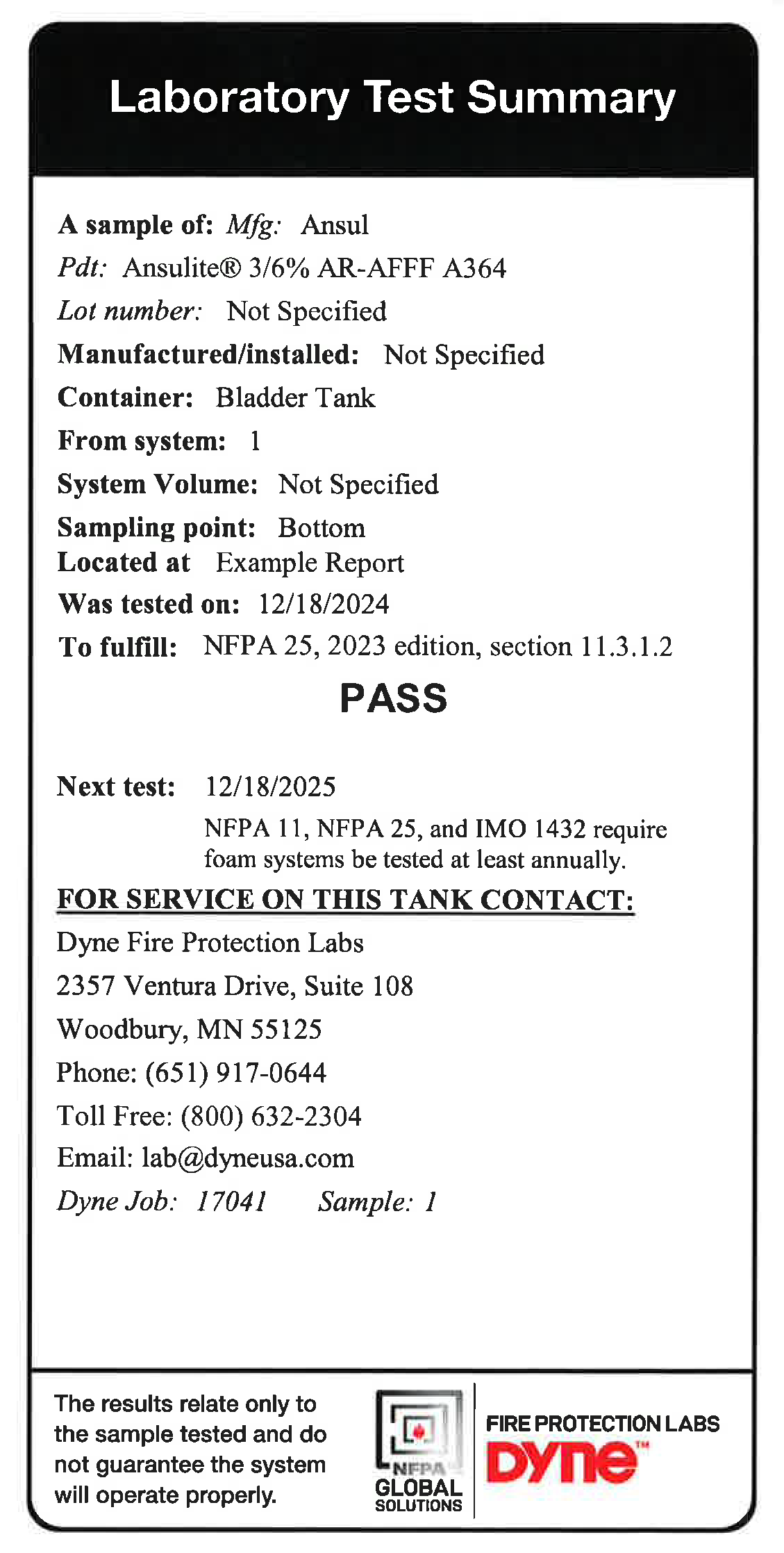
Filling out the paperwork for a sample of firefighting foam to send into Dyne for testing can be confusing if you are unfamiliar with some of the language or testing methods used in the firefighting foam business. IMO and NFPA have similar standards for firefighting foam testing, except IMO stipulates a slightly more rigorous analysis. IMO stands for International Maritime Organization and USCG is the United States Coast Guard.
Test results are delivered via email within 5 business days or less from the receipt of the sample(s).
You can contact our lab directly to discuss your testing needs at 800-632-2304.
Accordion content will appear here
For more information, please review our Legal Notice page.
Dyne Fire Protection Labs, an NFPA Global Solutions Company, provides independent laboratory testing for firefighting foam concentrates used in fire protection systems. Our testing services help system owners, contractors, and facility managers verify that foam concentrates continue to meet manufacturer specifications and applicable standards throughout their lifetime.
Foam concentrates can be affected by aging, contamination, improper storage, temperature fluctuations, dilution, and other environmental factors that may impact performance over time. Through comprehensive laboratory analysis, we evaluate key foam characteristics and provide objective data that supports compliance, maintenance decisions, and confidence in system readiness.
Testing Advantages:
In addition to evaluating current foam condition, our testing services can be used to establish performance baselines, support ongoing maintenance programs, and verify the effectiveness of corrective actions such as foam replacement, inventory management, storage improvements, or system modifications. Regular testing provides valuable documentation that helps demonstrate compliance and provides continued confidence that firefighting foam systems remain ready to perform when they are needed most.
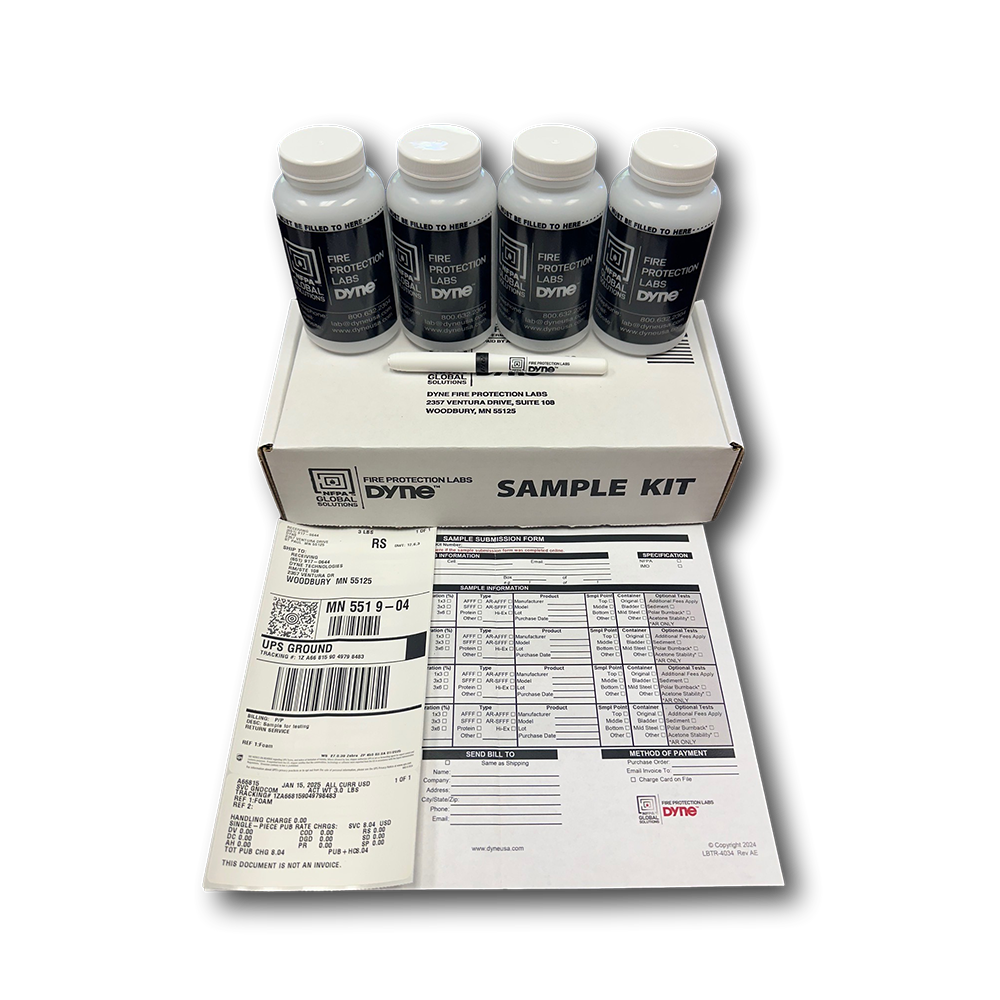
Order Your Firefighting Foam Kit